Recycling and Sustainability for Gardening Services Barnes
 At Gardening Services Barnes we place eco-friendly waste disposal at the heart of every garden job. Our Recycling and Sustainability page explains how we manage green waste, how we make the most of a sustainable rubbish gardening area, and the steps we take to support the borough's approach to resource recovery. We believe small changes on each site add up to a significant reduction in landfill and carbon emissions.
We separate arisings on-site using a proven three-stream approach for garden waste: clean woody prunings, leafy and herbaceous clippings, and soil/topsoil or inert materials. This allows us to route material accurately to composting facilities, local transfer stations and reuse partners. Our team uses clear, labelled sacks and bins so that garden refuse destined for composting does not get contaminated by non-organic rubbish.
 The London Borough of Richmond upon Thames (which includes Barnes) operates kerbside separation and household recycling centres that prioritise organic recycling and mixed recycling collections. We work within those local systems, aligning our collections with the borough's guidelines for paper, glass, plastics and garden organics. By matching borough-level separation standards we help ensure material collected from private gardens is accepted for biological treatment rather than being lost to residual waste.
Our sustainability targets and tangible commitments
We have set a clear recycling percentage target: to recycle or reuse at least 75% of all garden waste collected across Barnes within 24 months. This target covers: green waste composting, woody chipping for mulches, soil reuse, and salvage of healthy plants for donation. The target is ambitious but achievable through detailed on-site sorting, route optimisation and strong local partnerships.
 We track performance monthly and publish internal summaries. When material cannot be diverted to compost, we prioritise waste recovery options at local transfer stations and authorised organic contractors. Our aim is to reduce the amount sent to landfill and incineration, and to increase the proportion sent to aerobic composting, anaerobic digestion and wood-chipping facilities.
To make our ambitions practical we focus on data-driven collection: recording volumes by material type, checking contamination levels and scheduling pickups in line with the borough swap calendar. Transparency and continuous improvement are part of the service, so clients know how much of their garden waste is being diverted from landfill.
Local transfer stations, charity partnerships and reuse
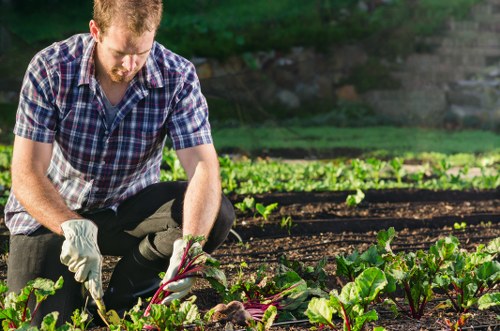 Our operations are integrated with local transfer stations and household recycling centres, where materials are consolidated and sent to the most appropriate processors. We follow local acceptance criteria — for example, woody material to chipper yards, leafy organics to composters, and topsoil to reclamation sites. These transfer hubs help us keep travel distances short, which reduces emissions and costs.
We also maintain active partnerships with charities and community groups across Barnes and neighbouring boroughs. Healthy plants, salvaged shrubs and containers that are still viable are offered to local charities, community gardens and allotment associations. Through these relationships we ensure a high level of reuse: old planters are donated, cuttings are redistributed and surplus compost is shared with community green spaces.
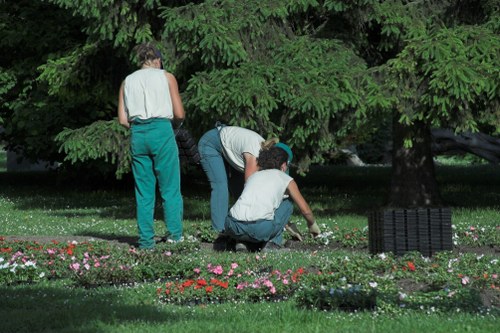 Our fleet consists of modern, low-emission vans and trailers, and we are progressively electrifying the fleet where operationally feasible. Route planning minimises empty miles and consolidates multiple small jobs into efficient rounds. Strong vehicle maintenance routines and driver training in eco-driving reduce fuel use and emissions, reinforcing our commitment to a low-carbon gardening service.
Across every job we employ sustainable garden waste practices designed to build soil health and reduce off-site disposal. In practical terms this means prioritising:
- On-site shredding and chipping to produce mulch that is returned to borders and beds, reducing the need for imported materials.
- Composting and green waste diversion — sending suitable organics to local biological treatment facilities rather than residual waste streams.
- Reuse and donation — matching plants and containers with community partners rather than throwing them away.
- Minimal-use approach — choosing hand tools and practices that avoid excess disturbance and reduce soil loss.
By combining the borough's waste separation systems with our own on-site segregation, and by working closely with local transfer stations and charity partners, Gardening Services Barnes creates a practical, measurable, and resilient approach to garden waste. Our initiatives support a sustainable rubbish gardening area and demonstrate how local gardening services can align with municipal recycling strategies.
Why this matters: healthy soil, reduced emissions, and circular reuse of organic materials make gardens more resilient and reduce the environmental footprint of garden maintenance. Whether you need regular green waste collections, seasonal clearances, or site-by-site waste planning, our approach keeps sustainability central to the job.
We welcome the opportunity to work within the borough framework and with community organisations to help Barnes move toward a greener, lower-carbon future — one garden at a time.